 English▼



Site Blog
Ligne de machines de fabrication de production de cellules cylindriques automatiques
fabrication et équipement de laboratoire de batterie de Li-ion 18650
Organigramme de la pile bouton au lithium-ion et liste des machines
fabrication et équipement de laboratoire de batterie de poche de li-ion
dec 2016 usa client acceptation d'usine de l'empileuse automatique
Contactez-nous
- Si vous avez des questions, veuillez communiquer avec nous, toutes les questions recevront une réponse
- Messagerie : David@tmaxcn.com
- Messagerie : Davidtmaxcn@gmail.com
- Ajouter : No. 39, Xinchang Road, Xinyang, Haicang Dist., Xiamen, Fujian, China (Mainland)
produits chauds
Blog
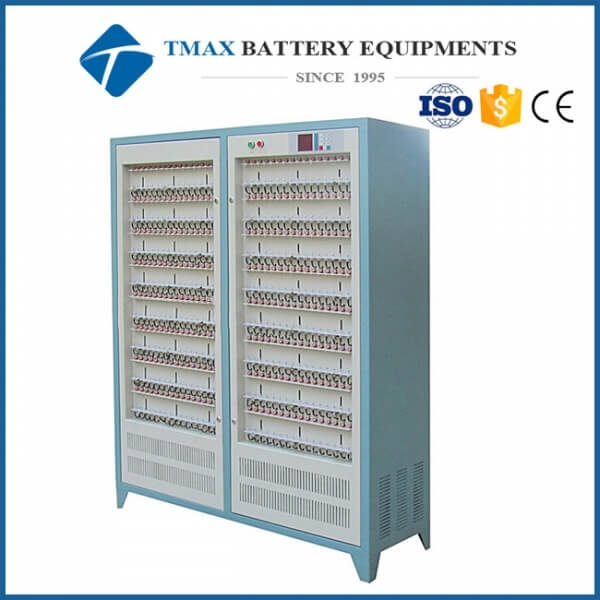
Lithium Battery Tester
Xiamen Tmax Battery Equipments Limited was set up as a manufacturer in 1995, dealing with lithium battery equipments, technology, etc. We have total manufacturing facilities of around 200000 square foot and more than 230 staff. Owning a group of experie-nced engineers and staffs, we can bring you not only reliable products and technology, but also excellent services and real value you will expect and enjoy.
A lithium battery tester is a specialized device used to evaluate the performance, capacity, health, and safety of lithiumion batteries. These testers are essential in ensuring that batteries meet their specifications before deployment in consumer electronics, electric vehicles (EVs), renewable energy systems, and other applications. In this article, we will explore the principles, types, applications, advantages, challenges, and innovations associated with lithium battery testers.
●Principles of Operation
1. Capacity Testing
Measures the actual capacity of the battery by discharging it at a controlled rate until it reaches its cutoff voltage.
Compares the measured capacity to the rated capacity specified by the manufacturer.
2. Internal Resistance Measurement
Determines the internal resistance of the battery, which affects its ability to deliver power efficiently.
Higher resistance indicates aging or degradation.
3. Voltage Monitoring
Tracks the battery's voltage during charge and discharge cycles to ensure it stays within safe operating limits.
4. Cycle Life Testing
Simulates repeated chargedischarge cycles to assess the battery's durability and lifespan.
5. Safety Testing
Evaluates the battery's response to extreme conditions such as overcharging, short circuits, and high temperatures.
●Types of Lithium Battery Testers
1. Manual Testers
Operated manually, these are costeffective and suitable for smallscale testing or hobbyists.
Examples include simple multimeters or basic capacity testers.
2. SemiAutomatic Testers
Offer programmable settings and automated data logging for more consistent results.
Ideal for mediumscale production environments.
3. Fully Automatic Testers
Designed for highvolume manufacturing, these machines handle all aspects of testing automatically.
Commonly used in professional battery production lines.
4. Advanced Analyzers
Provide detailed insights into battery health, including stateofcharge (SoC), stateofhealth (SoH), and impedance spectroscopy.
Used in research labs and R&D facilities.
5. Wireless Testers
Use Bluetooth or WiFi to transmit data to smartphones or computers for remote monitoring.
Convenient for field testing and mobile applications.
●Applications of Lithium Battery Testers
1. Manufacturing Quality Control
Ensures that batteries meet specifications before shipment to customers.
2. Research and Development
Evaluates new materials, designs, and chemistries for nextgeneration batteries.
3. Field Service and Maintenance
Diagnoses issues in deployed batteries, such as those in EVs or renewable energy systems.
4. DIY Projects
Helps hobbyists and enthusiasts test and optimize custom battery packs.
5. Safety Compliance
Verifies that batteries comply with international safety standards (e.g., UL, IEC).
●Advantages of Lithium Battery Testers
1. Accurate Results
Provides precise measurements of capacity, resistance, and other key parameters.
2. Early Detection of Issues
Identifies potential problems before they lead to failures or accidents.
3. Improved Efficiency
Automates testing processes, reducing labor costs and improving throughput.
4. Data Logging and Analysis
Stores test results for later analysis, helping to track battery performance over time.
5. Customizable Settings
Allows users to adjust parameters based on specific requirements or standards.
●Challenges in Using Lithium Battery Testers
1. Complexity
Advanced testers may require specialized training to operate effectively.
2. Cost
Highperformance testers can be expensive, especially for fully automatic systems.
3. Calibration
Regular calibration is necessary to ensure accurate and reliable results.
4. Testing Time
Capacity testing can take several hours, slowing down production lines.
5. Environmental Factors
Temperature, humidity, and other conditions can affect test results if not properly controlled.
●Innovations in Lithium Battery Tester Technology
To address challenges and enhance performance, manufacturers are developing advanced solutions:
1. AIPowered Analytics
Uses machine learning algorithms to predict battery degradation and optimize testing protocols.
2. IoT Integration
Enables realtime monitoring and remote control of testing equipment.
3. Faster Testing Methods
Develops techniques like pulse testing and impedance spectroscopy to reduce testing time.
4. Portable Designs
Creates lightweight and compact testers for onsite use.
5. EcoFriendly Features
Reduces energy consumption and waste heat during testing.
●The Future of Lithium Battery Testers
As battery technology evolves, so too will the tools used to test them. Key trends shaping the future of lithium battery testers include:
1. Increased Precision
Development of nanoscale measurement techniques for advanced battery chemistries.
2. Focus on Sustainability
Ecofriendly designs and processes to minimize environmental impact.
3. Integration with Emerging Technologies
Combining testers with AI, IoT, and robotics for smarter diagnostics and analysis.
4. Global Standards Compliance
Ensuring compatibility with evolving international regulations for safety and performance.
5. Expansion into New Markets
Adapting testers for emerging industries like aerospace, wearable technology, and renewable energy.
●Tips for Selecting the Right Lithium Battery Tester
1. Determine Your Needs
Consider the scale of your operation (hobbyist vs. industrial) and the specific tests you need to perform.
2. Evaluate Features
Look for adjustable settings, data logging capabilities, and safety features.
3. Check Brand Reputation
Choose a reputable manufacturer with good customer support and warranty options.
4. Compare Prices
Obtain quotes from multiple suppliers to ensure you get the best value for your budget.
5. Consider LongTerm Costs
Factor in operating costs, maintenance, and potential upgrades.
●Conclusion
Lithium battery testers are indispensable tools for anyone involved in battery manufacturing, research, or maintenance. They provide critical insights into battery performance, health, and safety, ensuring that devices and systems operate reliably and efficiently. Whether you're a hobbyist building a custom battery pack or a professional working in largescale manufacturing, investing in a quality tester can significantly improve your workflow.
What excites you most about the advancements in lithium battery tester technology? Share your thoughts below! Together, let’s explore how these innovative tools can shape the future of battery testing and beyond.
 +86 13174506016
 David@tmaxcn.com

